


NOTE: This article contains strong language and descriptions of racial violence.
SPRINGVILLE, Ala.—Rocky Myers sees the best in everyone. He can’t help it.
“I’m a Christian man, and I love the Lord,” Myers said in an interview from St. Clair Correctional Facility, where he’s serving his 32nd year of a life without parole sentence. “I try to look at everybody in the best light.”
So when the Black Alabamian’s legal team began to outline for him the extensive evidence of his trial lawyer’s deep relationship with the Ku Klux Klan, he was stunned.
“I thought, ‘Lord, have mercy,’” he said. “This is so sad.”
But slowly, things began to click.
John Mays, who served as the lead lawyer for Myers’ defense team at his trial, spent years defending the Klan and its members in both criminal and civil matters, according to court documents and press reports from the time.
Mays did not respond to a request for comment on this article, but in an interview with investigator Leah Nelson, a member of Myers’ legal team, he denied ever being a member of the white supremacist organization. Asked about contemporaneous newspaper reporting that the KKK had dubbed him Imperial Counsel, Mays rebuffed her. He’d been offered the title by Grand Wizard Robert Shelton, he said, but he’d never accepted. And she’d gotten the title wrong, he added: “It’s Imperial Klonsel.”
But Mays’ involvement with the United Klans of America, founded by Shelton, who Mays calls “Bob,” appears to have gone well beyond a courtroom relationship.
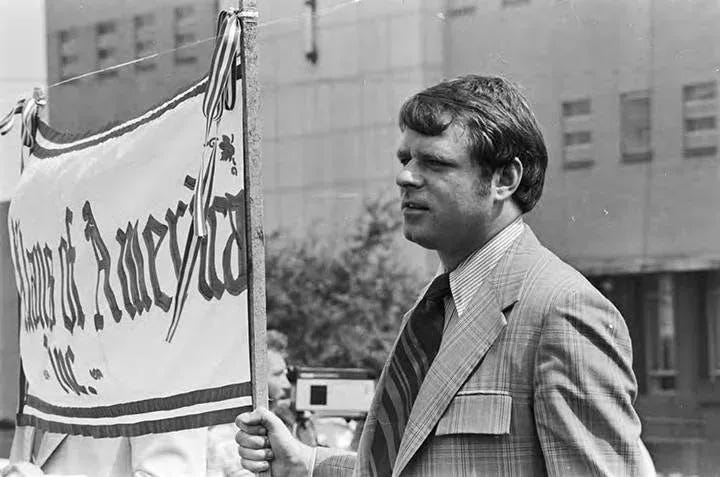
Contemporaneous media accounts document Mays’ attendance at Klan rallies and cross burnings across the South during the 1970s and 1980s, including in Alabama, Florida, Virginia, Kentucky, Mississippi, and Tennessee. He appears in a newspaper photograph at a Klan rally in Gadsden, Alabama, his right hand holding up a United Klans of America banner. Another press photograph shows him speaking to the gathered crowd.
For Rocky Myers and his current legal team, these are not benign extracurricular activities. Instead, they argue, Mays’ affiliation with the Klan, paired with his poor performance at trial, is clear evidence of a conflict of interest that left Myers facing a life of incarceration and, at the time, the death penalty.
Still, these new revelations—May’s lengthy history with the Klan, recently put together for the first time in the context of Myers’ conviction and sentences—were hard for Rocky Myers to swallow. He’d been duped. A man who’d told him he’d try to save his life had, just a few years prior, stood in front of a Klan rally and declared his allegiance to the white supremacist organization.
“You hear a lot about civil rights of niggers and the civil rights of murderers and of every kind of pervert known to humanity,” a press account quoted Mays as saying at a Klan rally and cross burning in Richmond, Virginia. “But what about the civil rights of the decent law abiding white man or the law abiding black man, for that matter?”
The more Myers thought about Mays, though, the more things began to fall in place.
Myers remembered how Mays would often make friendly chitchat with the prosecutor during lulls in Myers’ trial for the murder of Ludie Mae Tucker, an older white Decatur woman who died after being stabbed during the course of a robbery.
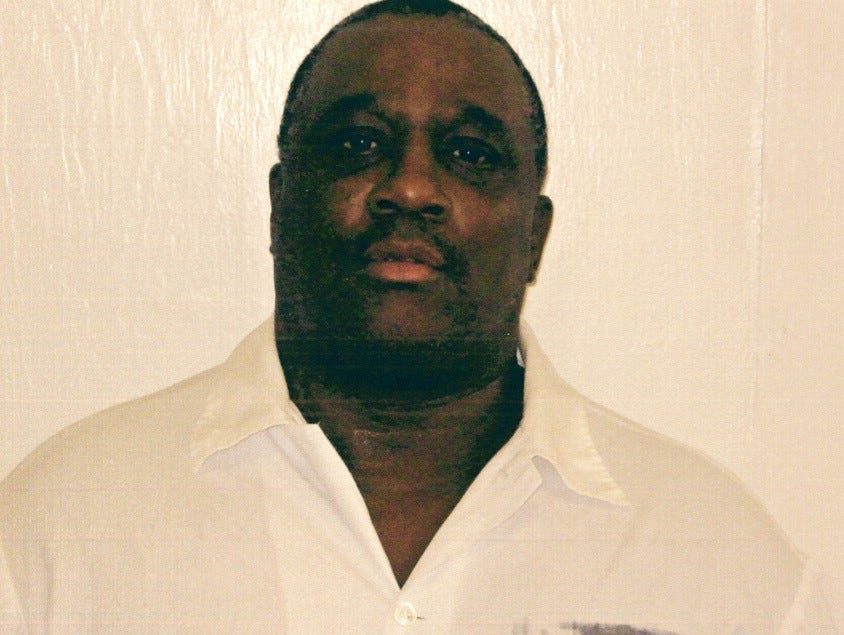
"My son would get mad,” Myers said of Mays’ apparent friendship with Myers’ prosecutor. “He wondered why Mays was hanging out with the enemy.”
Ultimately, Mays would fail Rocky Myers. Despite no physical evidence and conflicting testimony about his involvement, Myers was eventually convicted of murder. Although a jury recommended life in prison for Myers, an Alabama judge chose to sentence him to death instead.
In 2025, though, Myers received a nearly unprecedented reprieve: a commutation of his death sentence by Alabama Gov. Kay Ivey, a term-limited Republican who’s presided over two dozen executions in the state.
“…In the case of Ludie Mae Tucker’s murder, I have enough questions about Mr. Myers’ guilt that I cannot move forward with executing him,” Ivey wrote in a statement at the time. “For example, no murder weapon was found, and no DNA evidence or fingerprints or other physical evidence tied Mr. Myers to the scene of the crime.”
The commutation was only the second in Alabama history and the first by Ivey. The only other commutation in the modern era of the death penalty was that of Judith Ann Neeley in 1999—a reprieve that led state legislators to limit the governor’s power in such cases, requiring those whose lives would be spared by the governor to ultimately serve life without parole.
As of today, that remains Rocky Myers’ fate—life in prison without parole.
His legal team plans to change that.
Based on their extensive documentation of Mays’ connection with the KKK, Myers’ legal team has filed a Rule 32 petition asking a Morgan County judge to vacate their client’s conviction, arguing that Mays’ racial animus left Myers with virtually no representation at all.
Scott Anderson, Morgan County’s district attorney, asked the court in December for additional time to respond to Myers’ petition. It’s unclear whether Anderson plans to support or oppose Myers’ effort, but the elected official has until March 18 to decide.
A history of hate
Within a year of joining the Alabama bar in 1976, John Mays began a relationship with the Klan that would last for years.
1977 was a busy year for the newly minted lawyer. In April, at the behest of the Imperial Wizard, Mays sued the FBI on behalf of the Klan, arguing that the law enforcement agency had violated the civil rights of Klan members. Not only “blacks and Jews” have civil rights, Shelton was quoted as saying at the time. “The Klan does too.”
In July, he spoke at a Klan rally in Coffeeville, Alabama, alongside the organization’s grand dragon—its state leader—Chester Rockhold.
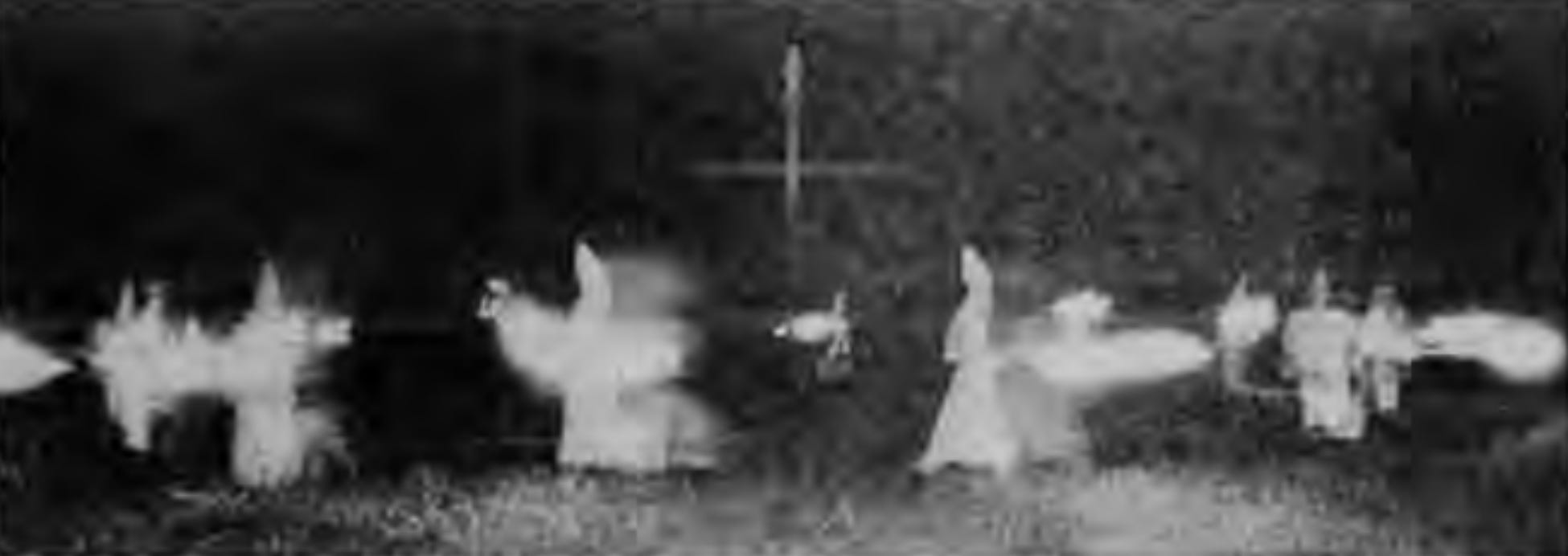
In September, he traveled with Shelton and Florida’s grand dragon to a Klan rally in Lakeland where he decried school integration.
Four days later, he spoke at another rally in Kentucky. The next day, he spoke at yet another in Richmond, according to press accounts.
The following year, 1978, media outlets document Mays’ continued leadership on Klan issues, speaking at white supremacist rallies in Gadsden, AL; Pascagoula, MS; and Munfordville, KY.
Miriam Bankston, an investigator for the Federal Defenders for the Middle District of Alabama, conducted the archival research that led to Myers’ effort to vacate his conviction over Mays’ apparent conflict of interest.
Bankston, a Black woman, said the more connections she found between Mays and the Klan, the angrier she became. For her, the fundamental issue with Mays’ representation of Myers comes down to one thing: choice. As a poor Black man in Alabama accused of killing a white woman, Myers had no choice but to accept the lawyer appointed to him by the court.
“Rocky didn’t have a choice,” Bankston said. “He got what he got.”
And what he got for a lawyer, she explained, was undeniably a Klansman.
By 1979, Mays was back in the courtroom and conducting press conferences on behalf of the Klan and its members.
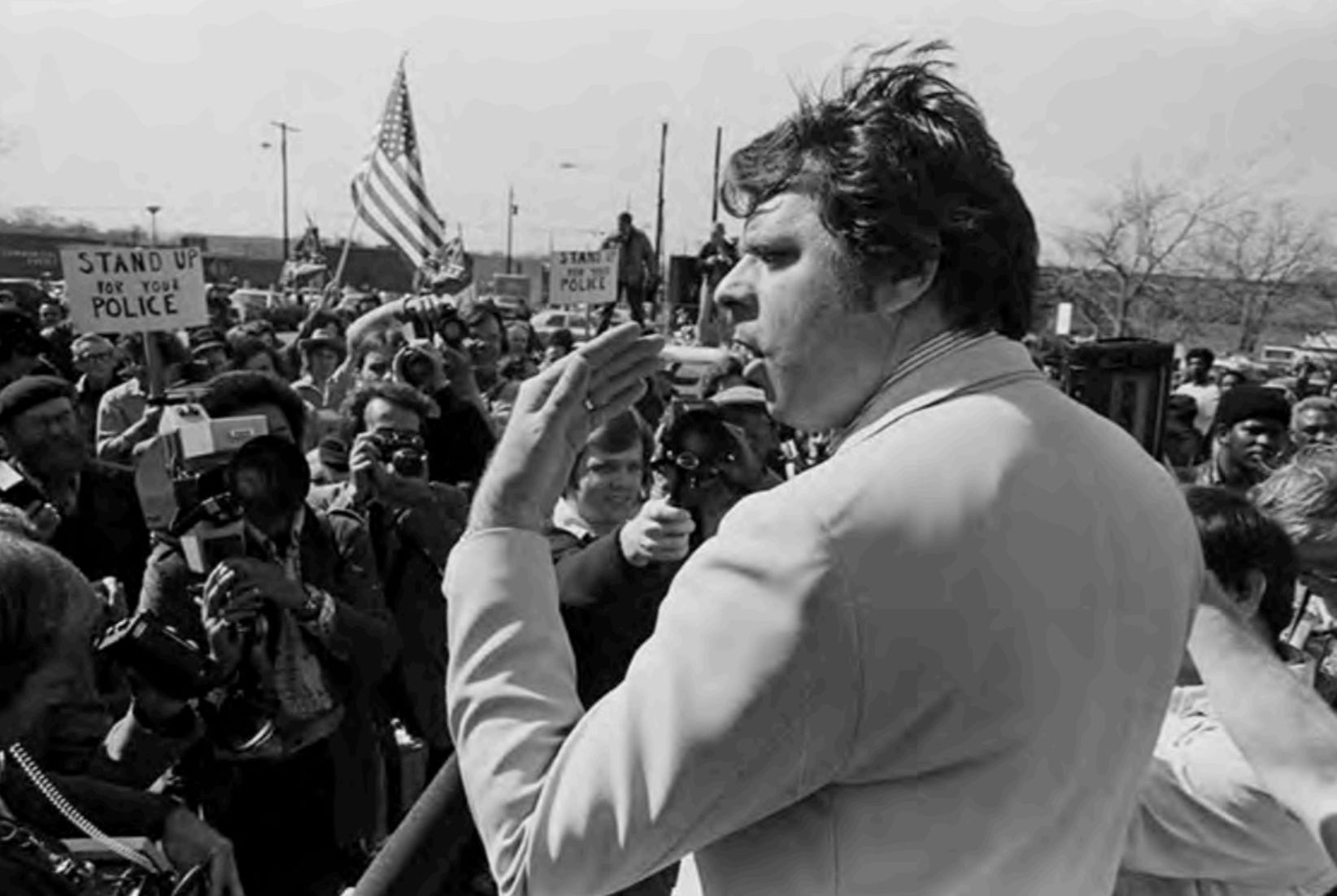
In February, he complained to the media at a press conference in Sylacauga, Alabama, that Klan members were being harassed by law enforcement.
A few weeks later, he appeared alongside Shelton and Klansman Eugene Thomas, who Mays proclaimed had been wrongfully convicted of the murder of civil rights worker Viola Liuzzo.
In June 1979, Mays came to the legal defense of 11 Sylacauga Klansmen who’d been accused of terrorism, arguing in court that potential jurors who were Klan members should not be struck from service.
By 1980, Mays had made his allegiance clear. That much was evident to members of the press covering a Klan rally near Louisville in September of that year where Mays appeared alongside Tennessee Grand Dragon Don Henson.
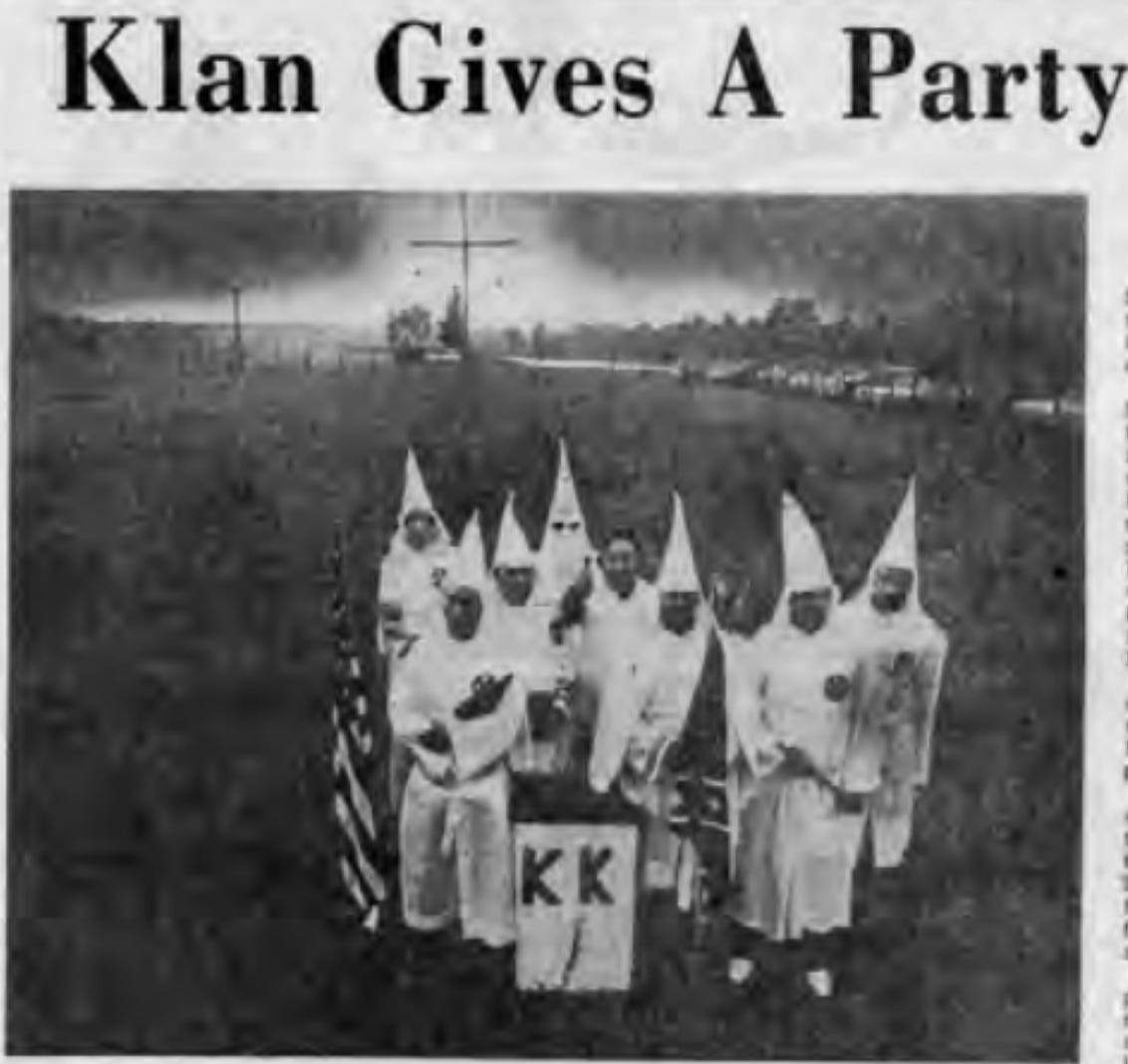
“Henson and Mays bear testimony that the Klan is no longer destined to be clandestine and its members stereotyped,” the press account said. “Neither man wore a robe or hood and both professed their allegiance openly. Henson had a dark black beard and wore a brown suit and white shirt, open at the collar. Mays wore a suit and tie. Their espousals, though articulate, were unmistakenly and typically those of the Klan.”
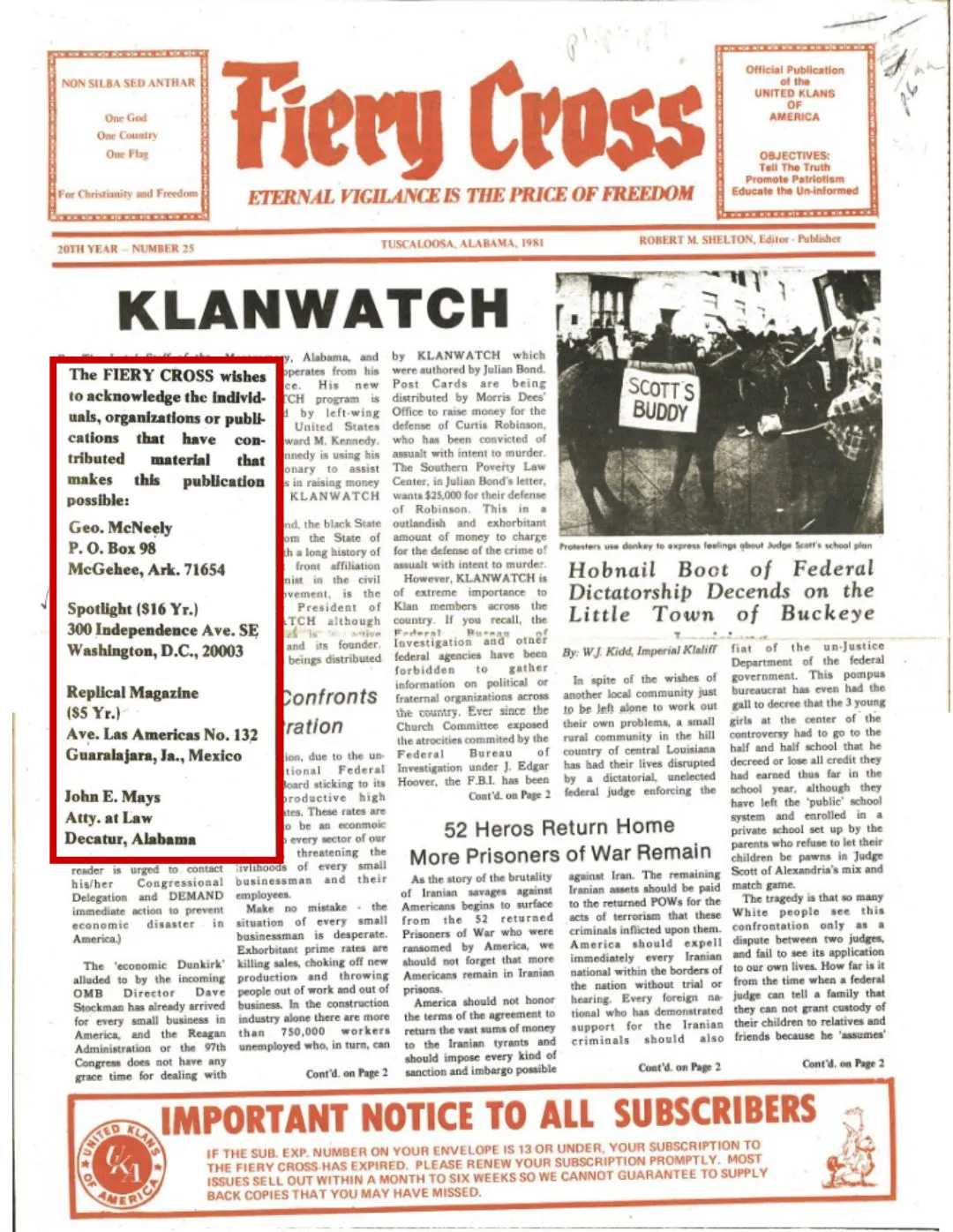
In January 1981, Mays was thanked in the masthead of the Fiery Cross, the Klan’s propaganda newsletter, for contributions “that make this publication possible.”
In March 1981, Klan members in Mobile, Alabama, tortured and hanged Michael Donald, a Black teenager, a tragedy sometimes referred to as the last lynching in the United States.
Less than five months later, Mays made another appearance at a Klan rally and cross burning in Tennessee where he encouraged whites to prepare for the oncoming race war.
Leah Nelson, one of the attorneys on Myers’ team, said reading Mays’ comments from that rally, held in the wake of the Michael Donald lynching, made her stomach turn.
Before she dove into the archival history around Mays, Nelson said she was open-minded about whether the lawyer was simply a First Amendment absolutist—a zealous advocate always in search of a lost cause.
But calling for a race war in the shadow of a lynching of an innocent Black teenager, she said, was the point of no return.
“There’s just no way, in my mind, that any reasonable person, no matter how idealistic they might have been during the ‘70s—trying to be the John Lewis of the civil rights movement for white people—could think that was okay to say,” Nelson explained. “Your group tortured a teenager to death for no reason other than the color of his skin, and you show up five months later at a rally calling for race war.”
A few years later, Mays would go well beyond Nelson’s point of no return. Beginning in October 1984, Mays represented Robert Shelton in a civil suit filed against him by Beulah Mae Donald, Michael’s mother. Mays would go on to lose the case, resulting in a $7 million verdict that left the Klan bankrupt.
Just five years later, Mays would be appointed to represent Rocky Myers for the murder of Ludie Mae Tucker.
A downright denial
Once Leah Nelson had seen the extent of Mays’ involvement with the Klan, she knew someone had to visit the attorney, who still practices law in Decatur, a small city in the northern part of the state.
Nelson, who is Jewish, had moved to Alabama years earlier to work to track and document hate and extremism for the Southern Poverty Law Center, a Montgomery-based nonprofit. She saw the meeting with Mays as a culmination of that work—an opportunity to quite literally confront these ideas firsthand.
What she was ultimately faced with, though, was denial.
Mays told Nelson he is not and has never been a member of the Klan. He said he’d never spoken at Klan rallies or cross burnings. He was simply a good defense lawyer, he argued.
But Mays’ reputation among Alabama Klansmen isn’t simply that of a good lawyer. It’s that of a fellow member.
Billy Morris, a self-described Klan member living in Jefferson County, Alabama, told Tread News that Mays is well respected in Klan circles. Morris said that Mays served with his father as a member of the United Klans of America.
“I would like to sit down with him and speak with him before he passes away,” Morris said.
John M. Giggie, a professor of history and director of the Summersell Center for the Study of the South at the University of Alabama, is an expert on the Klan.
He said that it’s not unusual that older white men with deep Klan affiliations like Mays tend to shy away from public proclamations of their allegiances as the years go by.
“As one gets older, it’s very difficult to accept those truths about their past in part because you want those who love you to see you in a positive light,” he said. “So we see them distance themselves from their abuse—try to show it really wasn’t them or maybe that it’s something everyone did at the time—a general way to neuter the impact of their abuse.”
But the role of Klan lawyer has historically been one that did not come as a freelance role, Giggie said, but as a position of trust pivotal to the functioning of the extremist organization.
“This is the type of role that John Mays stepped into,” Giggie said. “There’s no way Robert Shelton would have appointed or turned to a lawyer that wasn’t in that mold—an aggressive and vigorous defender of Klan beliefs and Klan philosophy. That’s historically been the role of the Klan lawyer.”
All of the evidence, Giggie said, including Mays’ repeated representation of the Klan, his public statements and even the inclusion of his work in the Fiery Cross, beg the question of whether Rocky Myers could have been afforded a fair trial with John Mays as his defense attorney.
“It’s troubling,” Giggie said. “Very troubling.”
For Myers and his legal team, Mays’ deflections hold little weight.
“John Mays’ racism is evident today regardless of whether he ever carried a membership card or held the title of Imperial Klonsel,” their motion stated in part. “Mr. Myers respectfully requests this Court vacate his conviction and grant any such additional relief that is just, equitable, and proper.”
A Rocky road and a way forward
For more than three decades, Rocky Myers has been haunted by the injustices he knows happened in his case. He had always proclaimed his innocence. There was no physical evidence tying him to the crime. No DNA. No murder weapon. No matching fingerprints. Testimony during the trial was conflicting. Two of the witnesses who tied Myers to the events leading up the murder recanted after trial.
But as the years have passed, it’s the injustices he didn’t know about that keep Rocky Myers up at night. That his lawyer had represented the Klan. That his lawyer had personally represented the Imperial Wizard. It was hard to swallow.
And despite enough doubt about his guilt that Kay Ivey, a Republican governor, would spare his life through commutation, Myers still spends every moment of his life behind bars, locked away for a crime he’s always maintained he did not commit.
It’s frustrating, of course, but Myers said he has patience. He’s certain he’ll die a free man. He must.
His voice softened when he explained why.
“My daughter just had a brain aneurysm, and she’s been in the hospital for over three months,” he said. “She just came home two weeks ago and she needs me, and I need her.”
So Myers has faith. He has to.
It was just last year, he said, when he’d been notified the state’s attorney general had asked the Alabama Supreme Court to set his execution date. He’d begun preparing his family for his own death, telling them that clemency was a virtual impossibility.
Then came the call. His heart sank. He believed his lawyer, Kacey Keeton, was about to tell him the date he would die. She didn’t. His life had been spared for good.
“I thought I’d lost my mind,” Myers said. He began to cry. So did Keeton.
“It was beautiful,” he said.
That reprieve, Myers said, was a miracle. Now, as he continues to serve his life sentence in St. Clair Correctional Facility, he’s hoping for another.
“I’m getting out of here,” he said. “But these things just take time.”
Amazing...very good coverage and reporting. I was in DC for a death penalty-related event when Myers' clemency was announced. As for Mays, well - tigers have never lost their stripes.
So happy to see this out in the world. Fantastic reporting Lee. Sharing far and wide for the truth and for Rocky.