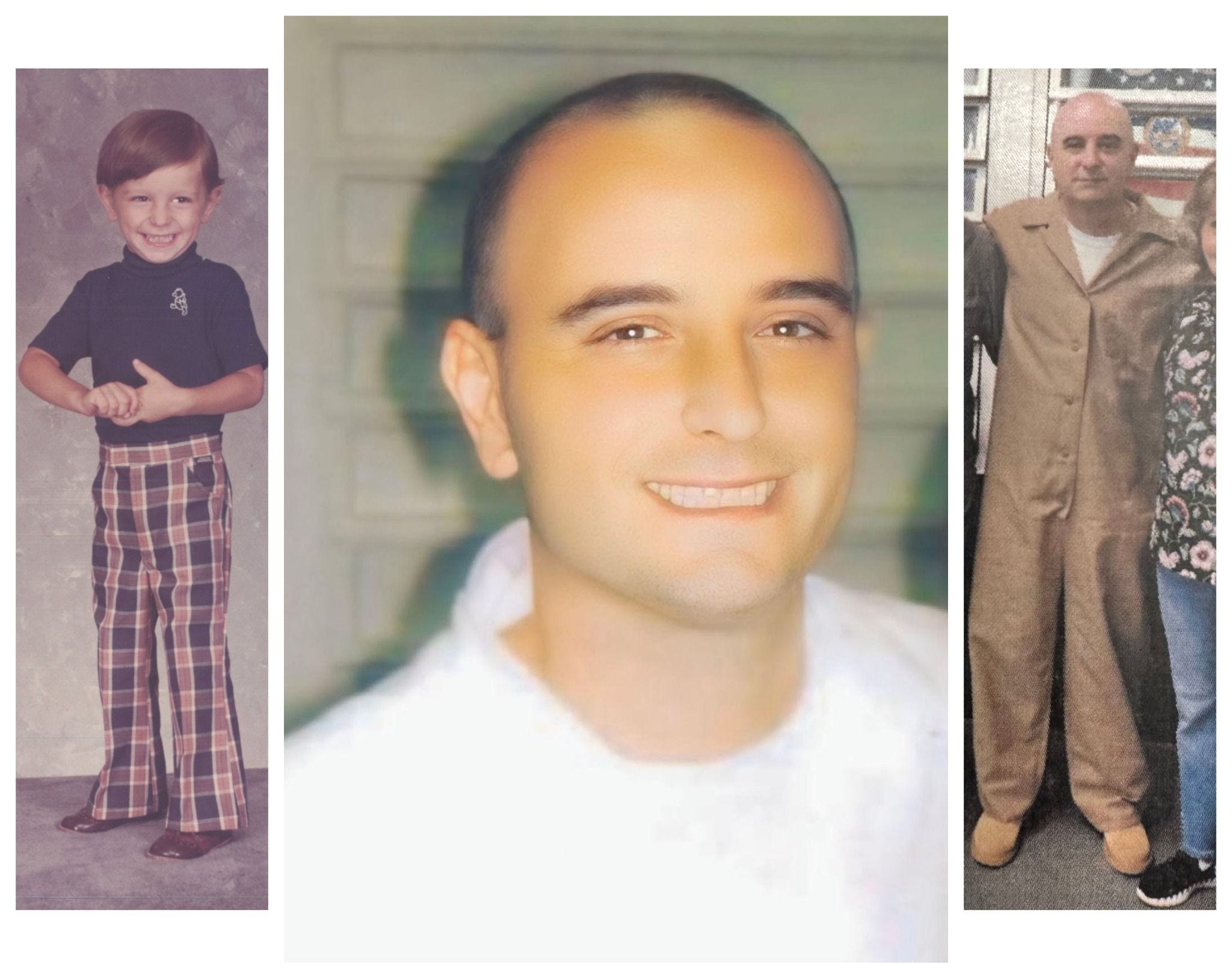
Moments before Michael Shannon Taylor took his last breath, he turned his head toward his lawyers, Leslie Smith and Kacey Keeton, both seated a few feet away in the witness room adjoining Alabama’s execution chamber.
Before them, their client lay strapped to a gurney, his arms outstretched crucifixion-style, IVs entering the insides of his elbows, a white fitted sheet clumsily draped over his body.
He looked at the lawyers and smiled.
“Thank you,” he mouthed. His eyes were soft. He meant it.
Keeton, a federal public defender, nodded her head repeatedly. She wanted Taylor to know she had heard him, but she was also conscious of the ominous message stamped on a license plate above her head: “Stay Seated And Quiet.”
Around 5:48 p.m., a prison staffer in a suit and bow tie opened the door of the chamber to let in Holman’s top warden, the state’s chief executioner.
The warden read the death warrant aloud into an old-school, corded microphone.
“Any last words?” he asked, extending the microphone toward the mouth of the restrained man below him.
Taylor took a moment.
“No, sir,” he said.
The warden returned the microphone to the wall.
Soon, Alabama began its final act of vengeance on Michael Shannon Taylor.
Around 5:52, Taylor smiled and nodded his head at a volunteer prison chaplain who had been praying at his feet. By 5:53, Taylor’s eyes began to roll back.
His breathing briefly became labored, but his breaths slowed as time passed. His eyes slowly began to close.
A guard conducted a consciousness check around 5:55, pinching Taylor’s arm.
“Inmate Taylor,” the guard yelled.
There was no response.
At 5:57, Taylor’s feet moved from side to side, shaking the fitted white sheet. Smith looked at Keeton.
Taylor did not appear to move again.
Prison guards closed the curtains to the execution chamber at 6:00, shielding Taylor’s motionless body from witnesses.
Keeton and Smith sat in silence. Their client was dead.
Half an hour later, in the parking lot of a Love’s truck stop a few miles up Interstate 65 from Holman prison, Keeton’s eyes welled with tears when she realized she was having difficulty talking about Taylor in the past tense.
“I really didn’t want to get up out of bed this morning,” Keeton said. She knew her client was likely at the end of the line legally. All that was left to do was pray and wait.
Still, she would soon head to Holman, where she would spend some final moments with her client and his family before the state ended his life.
There, Keeton said, in the prison’s austere visitor’s room, Taylor was able to spend meaningful, quiet moments with his father and siblings—none of whom, she noted, was convicted of a capital crime.
“I’ve lost a sibling before,” Keeton said. “I’ve watched my father lose a child. Parents should never have to bury their children.”
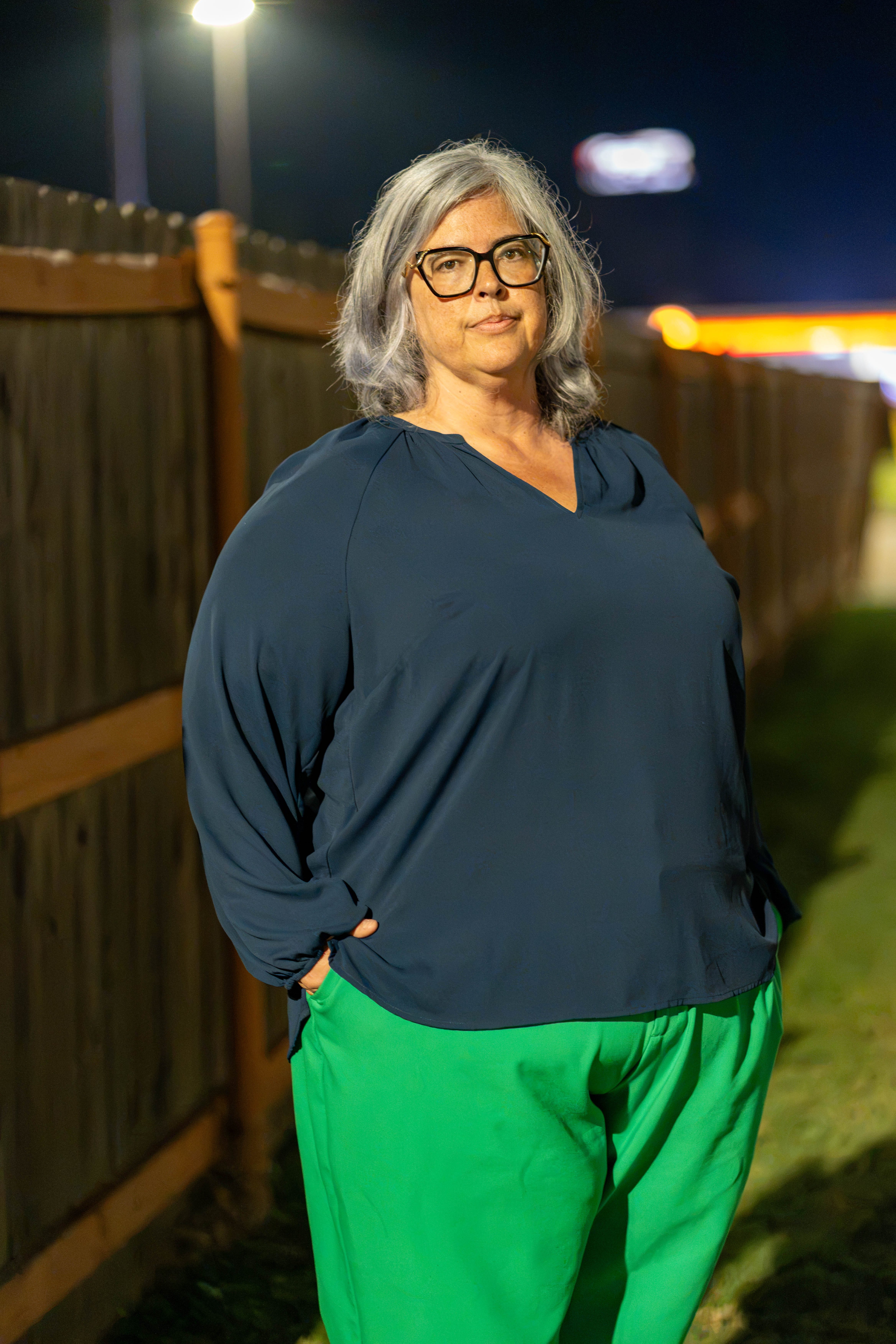
That’s, of course, equally true of the family of Taylor’s victims, Keeton said.
Taylor was convicted of the 1991 double homicide of Ivan and Lucille Moore, an elderly couple.
Keeton has worked in capital cases for about two decades, and in that time, she said she’s always carried the weight of her client’s actions and their impact on others.
That’s even true on execution day, she said.
“Today is about human loss,” Keeton said. “But people forget—or they refuse to name—that there is harm all around.”
That harm includes that inflicted on the families of the victim and of the condemned, as well as on all of those involved in the process itself, from journalists to lawyers to prison guards.
“If we, as a people, really care about our communities, it’s worth it to name all of the people hurting in that space and to hold all of the families impacted in prayer,” she said. “Everyone is hurting.”
Keeton is certainly hurting. Taylor is her third client the state has executed and the second she’s witnessed be killed.
Watching someone die changes a person, she said.
“The first death I ever witnessed was my mother, and I held her hand when she died. That forever changed me,” Keeton said. “But these are different because they are a murder. Sitting there and watching people kill someone in a regimented way is something you can’t unsee.”
What gives her some comfort is that Taylor is now at peace. He lost his mother a few years ago. Keeton hopes they’ve now been reunited.
“I hope his mama’s giving him the biggest hug,” she said.
Ultimately, Keeton said she thinks Taylor struggled to believe he was worthy of love.
“He is—he was—worthy of love,” Keeton said. “Every single one of us is.”
She smiled.
“It’s Ephesians.”
Faith, not works, leads to God’s grace.
“For it is by grace you have been saved, through faith—and this is not from yourselves, it is the gift of God—not by works, so that no one can boast.”
Before his execution, Taylor’s brothers serving on Alabama’s death row held a vigil in his honor.
During the service, one of his closest friends quoted from an old sermon he now calls “Mikey’s poem.”
“Death is nothing at all,” the sermon said. “I have only slipped away to the next room. I am and you are… I am but waiting for you. For an interval. Somewhere. Very near. Just around the corner.”
As Keeton wiped the tears from her eye in the Love’s parking lot, one of the men of death row wiped his tears, too.
The men on the row already miss their brother’s laugh, he said. It’s a joy they’ll never forget.
“I’m so thankful for friends like Mike,” he said.
But it won’t be long before they’ll meet again, he explained. Very near. Mikey will be just around the corner.